Septic System Maintenance
Septic system maintenance is crucial for water quality as these systems contaminate lakes and streams in our watershed when they fail.
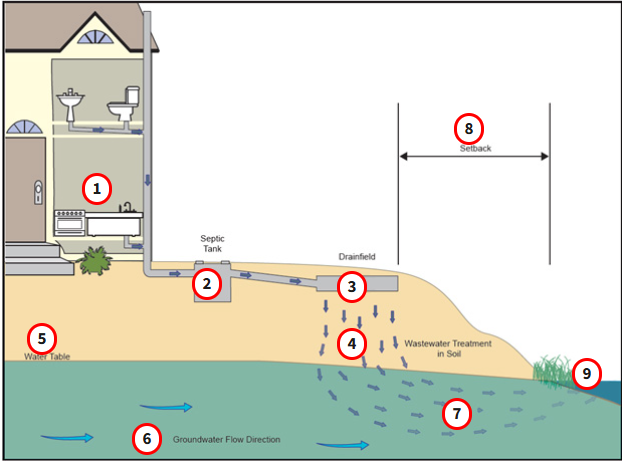
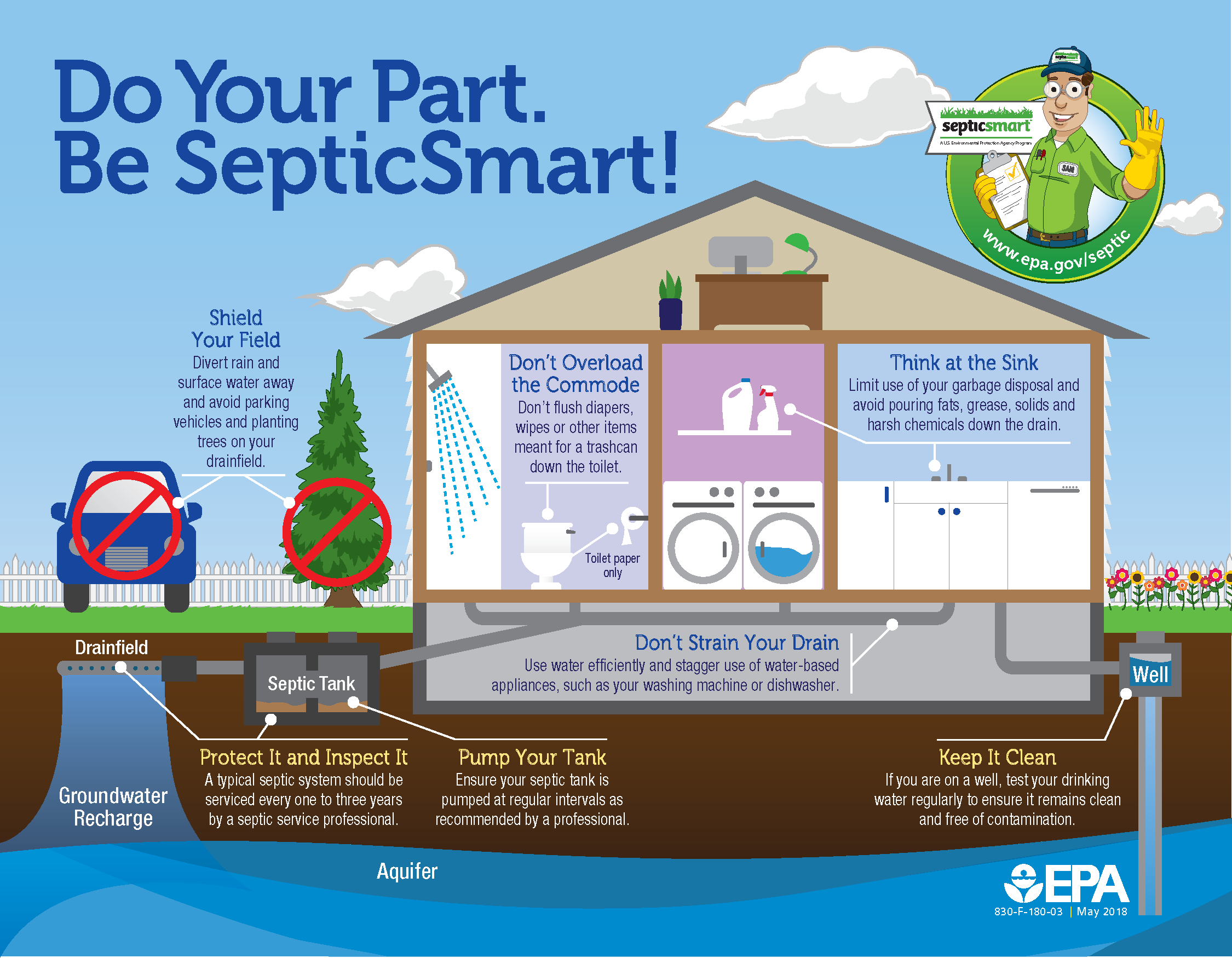
Septic System Interactive diagram from the EPA.
Septic Rules in Enfield, NH
In Enfield, all shoreland individual sewage disposal systems need to be inspected once every 6 years, and pumped once every 3 years.
You can find more about the rules adopted on January 1, 2025 here: Town of Enfield Shoreland Septic System Regulations
NH Statewide Septic System Policies
Failed Septic Systems
The state of New Hampshire requires that septic system failures must be addressed by property owners. New Hampshire RSA 485-A:2 defines failure as “the condition produced when a subsurface sewage or waste disposal system does not properly contain or treat sewage or causes the discharge of sewage on the ground surface or directly into surface waters, or the effluent disposal area is located in the seasonal high groundwater table.” Failures can be reported to NHDES by town health officers, permitted designers or other local officials responsible for health code enforcement. You can find more information here.
Responsible Septic System Best Practices
Septic system maintenance is key to the water quality of Crystal Lake, and helps extend the life of your septic sytem. Regular pumping and inspections protect both groundwater sources and surface waters. Follow these tips for caring for your septic system and Crystal Lake!
Schedule Routine Maintenance: Aim for a professional pump-out and filter cleaning every 3 years. Don't just check the tank—ensure the technician inspects every component and follow their report's advice.
Protect Your Drainfield: Keep the area clear of trees, shrubs, and heavy vehicles. Preventing root intrusion and soil compaction is key to a long-lasting system.
Conserve Water Indoors: High water volume stresses your system. Switch to high-efficiency appliances, fix leaks immediately, and space out laundry loads to give your tank time to process.
Toilet Paper Only: Avoid flushing anything other than human waste and septic-safe toilet paper.
Watch the Drain: Keep grease, food scraps, chemicals, and paint out of your pipes. These items can kill the "good" bacteria your system needs to break down waste.